Escapes · Portugal
Lisbon, the Atlantic Escape
Two and a half hours from Paris: five days of hills, azulejos and ocean.
After Deauville and Biarritz, our escapes series crosses a border. In late July the team boarded a morning flight to Lisbon with five days ahead and one hunch to verify: that the Portuguese capital is the finest Atlantic extension of the Parisian art of living. Here is our journal — what we saw, where we slept and ate: every address tested on the ground, no favours given.
See our Paris apartments → Book direct — up to 5% less than Airbnb & BookingThe capital that faces the ocean
Lisbon is not discovered, it is earned: seven hills, calçada pavements that shine like wet marble, and at every summit a reward — a miradouro, a church rooftop, the Tagus widening until it looks like open sea. Like Paris, Lisbon lives by village-neighbourhoods: the commercial Baixa, the literary Chiado, Alfama still singing fado after dark. But here, every street eventually runs down to the water.
The city you walk today was born of a catastrophe: the earthquake of 1755, which levelled the centre. The Marquis of Pombal rebuilt it on a grid — the Pombaline Baixa, one of Europe's first earthquake-resistant town plans. Around it, the spared quarters kept their Moorish lanes, their azulejo façades and that singular blend of maritime grandeur and easy living that keeps drawing you back.
Getting to Lisbon from Paris
- By plane — Daily direct flights from Charles de Gaulle and Orly (TAP Air Portugal, Air France, easyJet, Transavia, Vueling), in about 2 h 35. The route fills fast in summer — book early, fares soar as departure nears.
- Airport to the centre — Humberto Delgado sits inside the city, twenty minutes from the centre by the red metro line or an Uber.
- Once there — Everything works on foot and by Uber, with short, very affordable rides. Add tram 28 for the folklore — early morning — and the Cascais train from Cais do Sodré.
- The detail that changes everything — Lisbon runs one hour behind Paris. An extra hour of sunlight on every evening.
The Pestana Palace: sleeping in a national monument
Our address for this journal is a palace: the Palácio Vale Flor, built in the early 1900s by a marquis who made his fortune in São Tomé cocoa, listed as a national monument and reborn as the Pestana Palace. On the heights of Alcântara, ten minutes by car from the centre, you sleep amid gilded salons, botanical gardens and a pool hidden under the palms — and come home at night “to the palace” the way others go back to a hotel.
The quiet neighbourhood is a choice: you trade a metro doorstep for breakfasts under the arcades and a ten-minute Uber home. In high summer, for a palace of this rank, Lisbon remains surprisingly accessible — expect considerably more in Paris for the same standing.
Belém: the Jerónimos and the morning pastéis
Start with Belém, and start early. This is where the caravels set sail, and everything here celebrates the Age of Discoveries: the Belém Tower sitting on the water, the Monument to the Discoveries shaped like a ship's prow, and above all the Jerónimos Monastery, the UNESCO-listed masterpiece of the Manueline style — honey-coloured stone carved into ropes, shells and armillary spheres, as if the ocean had petrified a dream.
Inside, the nave stops you in your tracks: palm-tree pillars opening into rib vaults twenty-five metres up, Vasco da Gama's tomb on your left. Arrive at opening time — the queue turns serious by mid-morning.
The reward is three hundred metres away: Pastéis de Belém, the house that has kept the monastery's original recipe since 1837. Warm, crisp, dusted with cinnamon — under two euros each, and the technique is still a secret. The trick: the takeaway counter moves far faster than the dining room.
From the Baixa to Alfama: the city that climbs
The next day belongs to the hills. Climb first to the São Pedro de Alcântara miradouro, Príncipe Real's balcony over the city: St George's Castle faces you, the whole town terraced below. Then drop through Chiado — compulsory stop at Bertrand, the world's oldest working bookshop (1732) — down to the grid of the Baixa and the Arco da Rua Augusta, opening onto the vast Praça do Comércio and the river.
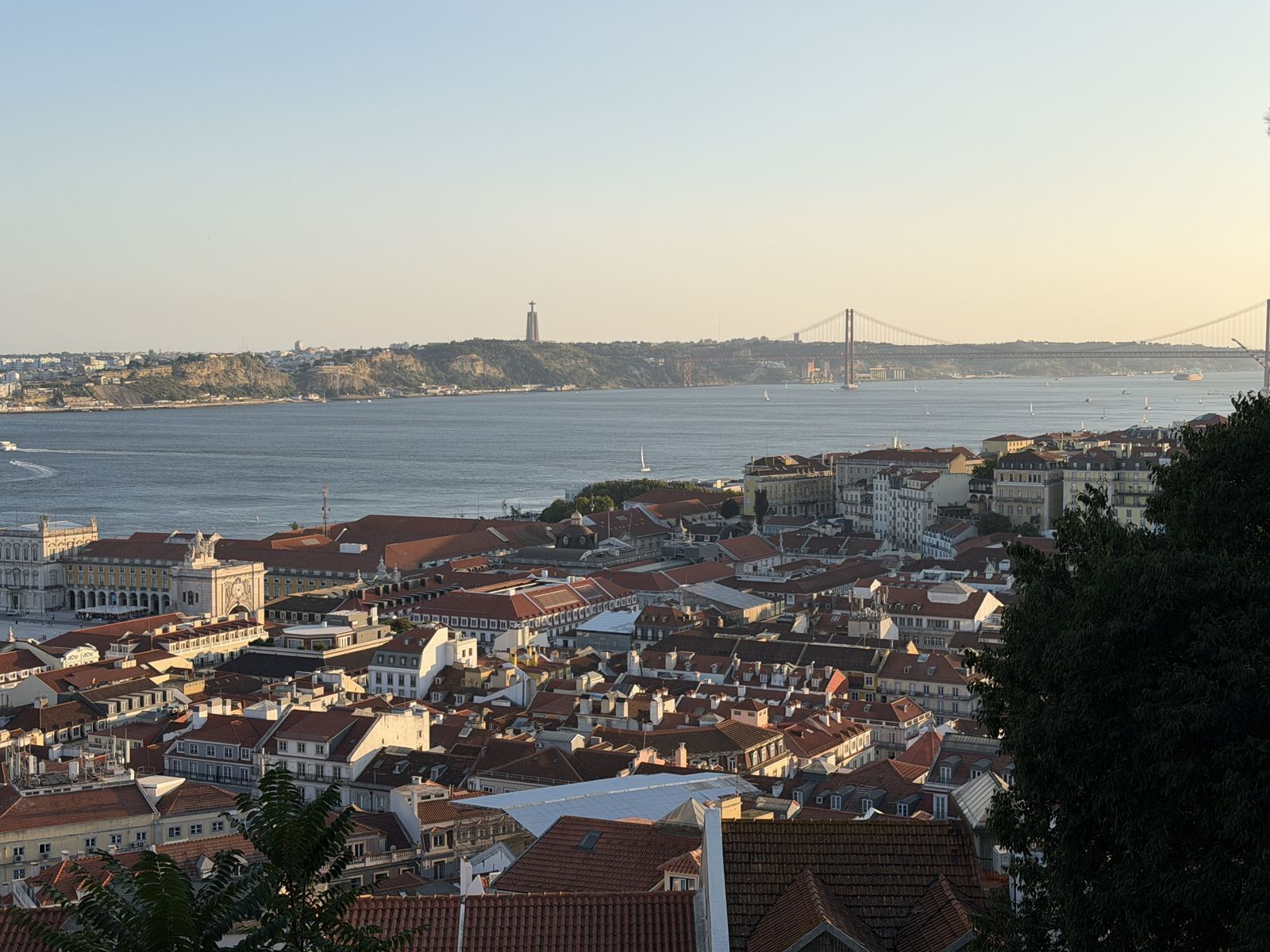
To climb towards Alfama we hailed a tuk-tuk on the fly (negotiable, and frankly joyful). At the top: the Sé cathedral, Romanesque and fortress-like, then the twin miradouros of Santa Luzia and Portas do Sol, where this journal's opening photograph was taken. Save Alfama for the end of the day: when the low light grazes the rooftops, laundry dries at the windows and the first notes of fado drift out of the tascas, you understand why this quarter never stopped being a village.
Cascais, the Boca do Inferno and the Oceanário
Day three: the ocean. The coastal train leaves Cais do Sodré and follows the estuary to Cascais in forty minutes — we took a morning Uber instead, half an hour door to door. A fishing village turned royal resort, Cascais lines up eclectic villas, gardens of hydrangeas and peacocks, and small golden coves. Twenty minutes' walk along the corniche, the Boca do Inferno: a cliff arch where the Atlantic thunders in — spectacular even on a calm sea.
On the way back, head to the city's eastern edge, the Parque das Nações, legacy of Expo 98: the Lisbon Oceanário is one of Europe's largest aquariums, built around a five-million-litre central tank where sharks, rays and sunfish circle. The sea otters and the garden eels alone are worth the trip — allow a good two hours.
LX Factory, the mill turned creative village
Last morning under the 25 de Abril bridge — that Golden Gate lookalike striding across the Tagus. At its feet, the LX Factory: an 1846 textile mill reborn as a creative village, cobbled lanes covered in murals, studios, cafés, and the Ler Devagar bookshop set in an old printing works, a flying bicycle suspended between the shelves. Don't miss Bordalo II's monumental bee, sculpted from salvaged rubbish — a manifesto in itself.
Our tables — all tested on the ground
- Faz Frio (Príncipe Real) — An institution founded in 1882: old tiles, little curtained booths, salt cod on steaming mash and golden croquettes. Our favourite lunch of the stay.
- Parra Wine Bistro (Príncipe Real) — Natural Portuguese wines and small plates made for sharing. Perfect for an arrival dinner.
- Antù (Alfama) — A small candlelit room in the lanes, market-driven cooking.
- Honest Greens — The green, quick, well-made pause between two visits.
- Pastéis de Belém — The real ones, warm from the oven: under €2 apiece. Nothing to add.
Booking tours and activities
Lisbon lends itself beautifully to experiences: a fado evening in Alfama, a sunset sail on the Tagus, a day in Sintra among palaces and cliffs. In summer the best slots go fast — book before you leave.
Lisbon City Center Tour - The Unmissable Lisbon
Devour Lisbon: The Ultimate Portuguese Food Tour
Lisbon Sunset Sailing with Portuguese Wine and History
Explore Lisbon by Tuk Tuk: History and Viewpoints
Bike Tours Lisbon - Center of Lisbon to Belém
Best of Lisbon Private Walking Tour
Experiences offered via Viator — booking may earn Lavie Maison a commission, at no extra cost to you.
Where to stay in Lisbon: our addresses
Partner links — booking may earn Lavie Maison a commission, at no extra cost to you.
Before or after Lisbon: our Paris apartments
Book direct with us — the same homes, up to 5% less than on Airbnb or Booking.
Lavie Maison | Montmartre Cosy Studio
Opéra – Grands Boulevards
Lavie Maison AC Fontaine Studio
Auteuil
Lavie Maison : AC & Terrace
Auteuil
See all our Paris apartments →
Compare with real hotel prices in Paris →
Before flying home, one last stop: the Claus Porto boutique in Chiado, Portugal's other great house (1887) — soaps and colognes wrapped like jewels, the souvenir that never ends up forgotten in a drawer.
In Lisbon, luxury is not a hotel category: it is the late-afternoon light on the rooftops of Alfama. It comes included with every budget.
Frequently asked questions
How long does it take to get from Paris to Lisbon?
About 2 h 35 on a direct flight from Charles de Gaulle or Orly (TAP Air Portugal, Air France, easyJet, Transavia, Vueling). Humberto Delgado airport is twenty minutes from the centre, with a direct metro line. And Lisbon runs one hour behind Paris.
How many days do you need in Lisbon?
Three days cover the city (Belém, the Baixa, Alfama). Allow four to five to add Cascais, the Oceanário and the LX Factory — this journal's format — or a day trip to Sintra.
What budget should you plan for Lisbon?
Noticeably less than Paris at equal comfort: charming hotels between €120 and €180 a night, lunch menus around €15, trams and Ubers very affordable. Even the palace hotels stay below Parisian rates, including in high summer — and the miradouros are free at sunset.
Is Lisbon a good idea at the height of summer?
Yes — provided you work with the heat: visits in the morning, ocean or museums in the afternoon, miradouros at sunset. The Atlantic tempers the city — it breathes easier than Madrid or Rome in July — but the hills must be earned: flat shoes and a bottle of water.
How do you get around Lisbon?
On foot first — it is a walker's city. Then by Uber, very affordable over short distances. Tram 28 crosses every historic quarter (board early in the morning), and the train from Cais do Sodré follows the estuary to Cascais in forty minutes.