City Guide · Nice
What to Do in Nice, France: Plans for 1, 2, 3, 5 Days or a Week
Not a checklist. A set of honest plans built around how many mornings you actually have on the Baie des Anges.
Most guides to Nice hand you the same twenty sights and wish you luck. That's not the real question. The real question is how many days do you have — because the answer changes everything: whether you leave the city at all, whether you climb Èze, whether you sit down for a proper socca lunch or eat it standing up on Rue Pairolière. Below, five honest plans by length of stay, with the trade-offs stated plainly.
See our Nice apartments → Book direct — up to 5% less than Airbnb & BookingFirst, the real trade-off
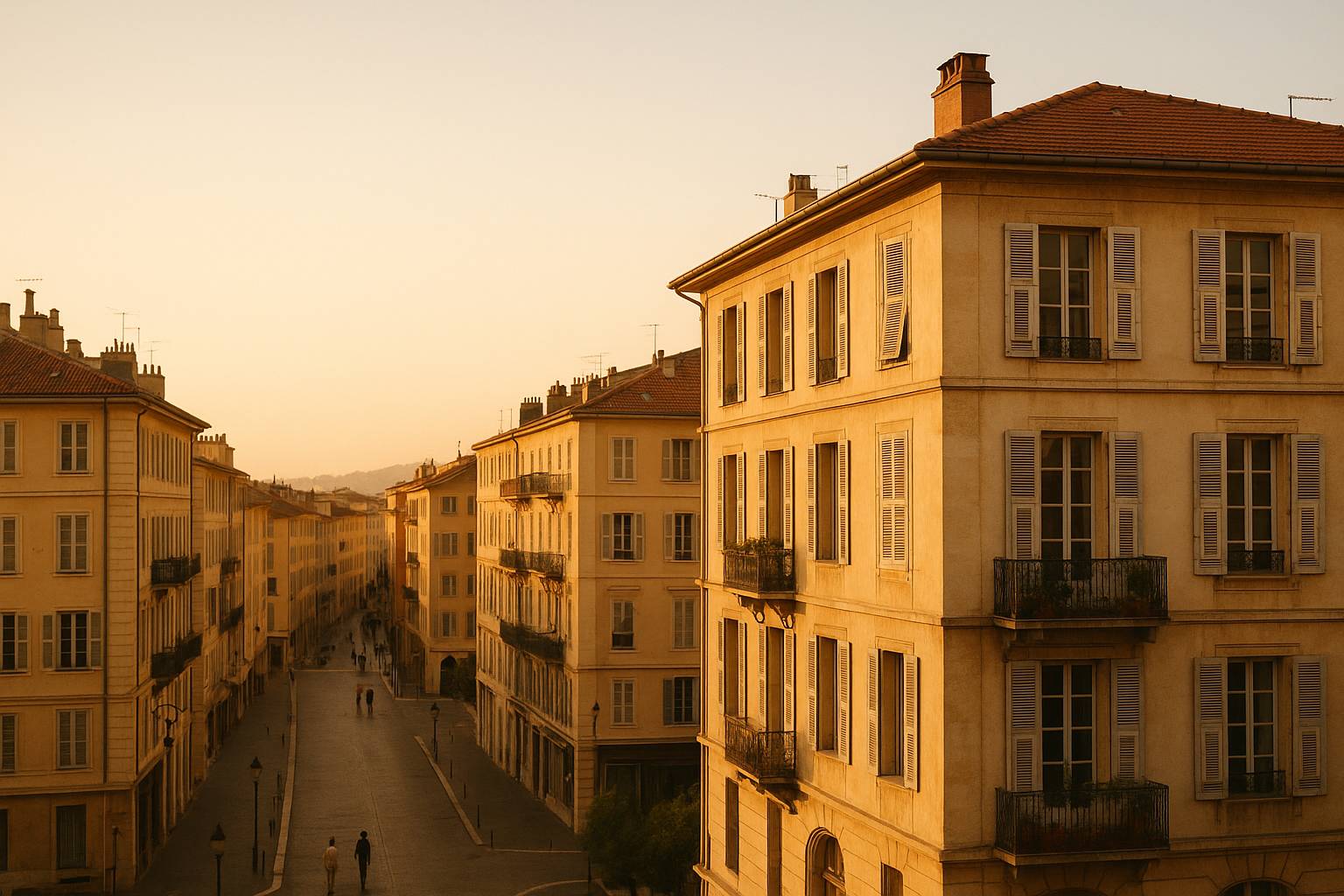
Nice is not a checklist city. It is a city that rewards a certain rhythm — a swim before breakfast, a long lunch, a walk uphill in the late afternoon when the light turns copper on the ochre façades. Trying to compress that rhythm into a race between museums is the fastest way to have a mediocre trip in a place that offers, almost passively, one of the best moods in Europe.
So the first question isn't what to see. It's how long am I here. One day and you stay strictly in the city; the coast villages are a mistake. Two days and you get Vieux Nice properly plus one museum. Three days is the sweet spot for a first visit — that's when Villefranche or Èze start making sense. Five days and you can bring in Antibes or a full day in the arrière-pays. A week and you stop being a tourist and start living here, which is really what Nice is designed for.
One thing to keep in mind throughout: the sea sets the day. Mornings are for beach and Vieux Nice before the cruise crowds land around 10:30. Middays are for shade and long lunches. Late afternoons — 5pm to 8pm in season — are the golden window for viewpoints, the Cours Saleya flower market winding down, and the Promenade des Anglais at its most cinematic. Fight that rhythm and Nice feels hot and crowded. Follow it and the city empties out around you.
1 day in Nice
One day is short. Accept it and stay in town — no Èze, no Monaco, no Saint-Paul-de-Vence. Chasing a coast village on a single day means two hours of transit for a rushed forty-minute walk and you'll have seen neither Nice nor the village properly. What you sacrifice: the arrière-pays. What you gain: a full, unhurried city.
Start early on the Promenade des Anglais — 7:30 or 8am, before the joggers thin out and the light is still soft. Walk east from the Negresco to the Opera, then cut inland into Vieux Nice. Do the Cours Saleya flower market (closed Mondays — this matters), get a socca at Chez Pipo or a slice at René Socca standing up, wander Rue Droite and Place Rossetti for a Fenocchio ice cream even if it's ten in the morning. By noon, lunch at a small place off the main axes: Bistrot d'Antoine if you booked, Chez Palmyre if you didn't.
Afternoon: climb Colline du Château. It's a cemetery and a park, not a castle, but the view over the terracotta roofs and the curve of the Baie des Anges is the single image you'll remember. Come down through the port, walk back along the Quai des États-Unis, and if you still have energy, do one museum — Matisse if you love painting, MAMAC if you prefer contemporary. Not both. Aperitif on Place Garibaldi, dinner in Vieux Nice. That's a full, honest day.
2 days in Nice
Two days changes the calculation entirely. Day one becomes your city day — the itinerary above, slower. Day two is where you make a choice: sea or hill. Both are excellent; picking is the point.
The sea choice: take the train to Villefranche-sur-Mer. It's ten minutes from Nice-Ville, costs around €2, and drops you above one of the prettiest bays on the coast. Swim from the beach, eat lunch at a terrace on the port (La Mère Germaine if you want the classic; any of the smaller places if you don't want to spend €80), walk the old town's covered Rue Obscure. Back in Nice by late afternoon for a proper aperitif hour on Cours Saleya.
The hill choice: take bus 82 or the 632 up to Èze village. Go early — by 11am the coaches arrive. Walk the exotic garden at the top for the vertigo view down to Cap Ferrat, then descend the Nietzsche path to Èze-sur-Mer (about 45 minutes, decent shoes required) and train back to Nice. This is a serious day; it earns a nap before dinner. What you skip on a two-day trip: Monaco (worth a day of its own, not half a day), Antibes, and any second museum. Don't try to fit them.
3 days in Nice
Three days is where a first trip to Nice comes together. Day one: the city, as above. Day two: Villefranche and Cap Ferrat combined — swim at Paloma Beach, walk the coastal path around the cap, lunch in Saint-Jean-Cap-Ferrat, back to Nice for evening. Day three: Èze and the mid-corniche, or a half-day in Monaco with a slow return.
If you have the appetite for one museum-heavy morning, day three is where it fits: the Matisse museum in Cimiez sits inside an old olive grove and pairs beautifully with the Roman ruins next door and a coffee at Monastère de Cimiez. Bus 5 gets you there in twenty minutes. Come back down for lunch on Place du Général de Gaulle or in Libération, the neighbourhood market that locals actually shop at (Tuesday to Sunday mornings) and where you'll pay half what you'd pay in Vieux Nice.
Three days is the shortest trip that lets you feel Nice rather than tick it off. Under three, you're visiting. At three and above, you start to live here.
What you still skip at three days: Antibes, Cannes, Menton, the Gorges du Verdon, Saint-Paul-de-Vence. All of them are real day trips. Trying to squeeze one in as a fourth thing on day three is the classic three-day mistake — you end up with a rushed afternoon in a place that deserved a full day.
5 days in Nice
Five days is the length where the arrière-pays opens up honestly. Do your three-day plan first — city, Villefranche/Cap Ferrat, Èze or Monaco — then add two proper day trips of your choice. My honest ranking, for a first visit:
- Antibes — 25 minutes by train. Best combination of a real old town, a serious museum (Picasso), a great morning market, and swimmable beaches. Add Cap d'Antibes coastal walk if you have energy.
- Menton — 35 minutes east by train, right at the Italian border. Quieter than Nice, lemon-yellow, terrific in shoulder seasons. The Cocteau museum and the old cemetery view are the two anchors.
- Saint-Paul-de-Vence and the Fondation Maeght — inland, needs a bus from Cagnes-sur-Mer or a car. The Fondation is one of the best small modern art museums in France; the village itself is charming but touristy — go for the art.
- Monaco — worth a full day if you haven't done it, not a half. Palace, Oceanographic Museum, Monte-Carlo, and a walk back through the exotic garden.
At five days, the sea should still be structuring your mornings. Don't stack five straight day trips — leave day four or five as a slow city day: a long swim, the Marc Chagall museum which is smaller and more manageable than Matisse, a lazy lunch in the Port Lympia neighbourhood, and evening drinks on Rue Bonaparte. That slow day is often what people remember most.
A week in Nice
A week in Nice isn't a bigger itinerary — it's a different kind of trip. You stop packing days and start choosing them. Groceries at Libération market, coffee at your local, a routine swim spot, dinner cooked at the apartment twice because the Cours Saleya market is genuinely that good and you're tired of restaurants. This is when a furnished apartment starts paying for itself in ways a hotel can't.
Use the first three or four days for the essentials — city, Villefranche, Èze, one big day trip. Then, in the second half, do the things that reward a slower approach: a full day at the Fondation Maeght with lunch in Saint-Paul; a long lunch inland at a village like Peille or Peillon; a day in the Vallée de la Vésubie if it's summer and you want mountain water; a train up to Tende on the Train des Merveilles line, which is one of the most underrated day trips on the coast.
Give yourself a rest day mid-week. Nice heat, especially June through September, is deceptive — you feel fine until day four when suddenly the museum you'd looked forward to feels like a slog. A pure beach day, or a pure market-and-terrace day with no monuments booked, resets everything. Then you get your last two days back at full strength for whatever you've been saving.
What changes by season
Season changes the plan more than in most French cities. In July and August, mornings before 10am are non-negotiable — after that the beach is packed, Vieux Nice is a slow shuffle, and museums with air conditioning start to look wise. Èze and Villefranche are best done at opening or after 5pm; the coach hours (11am to 4pm) are miserable. On the flip side, evenings run long — dinner at 9pm on Cours Saleya in July is the classic Nice memory for a reason.
Spring (April to early June) and autumn (mid-September to early November) are the honest best months. The sea is warm enough by late May and still swimmable well into October. Prices soften, the light is arguably better, and the day trips inland — Saint-Paul, the arrière-pays villages — are cooler and easier. Winter is quieter, milder than most people expect, and has its own strong argument: Carnival in February, the Nice–Menton citrus corridor at its most fragrant, and restaurants that actually have tables.
If your dates are set, cross-check them against the month-by-month calendar on our Nice pages — Carnival, the Jazz Festival, Ironman, the Prom'Party evenings and the flower parades all shift the city's mood noticeably. If your dates are still flexible, that same calendar is the best argument for shifting them by a week.
Planning mistakes to avoid
The most common one, by far: underestimating transit time to coast villages. Villefranche is 10 minutes on paper; door to beach is closer to 45 once you factor the walk to Nice-Ville, waiting for the train and the descent on the other side. Èze is worse — the bus from Nice takes 25 minutes on a good day and 50 in summer traffic. Plan half-day trips as full mornings or full afternoons, not two-hour windows.
Second mistake: stacking museums. Nice has good ones — Matisse, Chagall, MAMAC, the Musée Masséna — but three in a day is punishment. One serious museum per day, ideally in the late morning or after the beach. And check closure days: most museums close either Monday or Tuesday, the Cours Saleya flower market is closed Monday (antique market instead), and many restaurants in Vieux Nice close Sunday evening and all day Monday.
Third: not booking the two things that reward booking. The Èze perfumeries and Monaco's Oceanographic Museum in peak season can eat an hour of your day in queue — a €2 skip-the-line slot is worth it. Same for Matisse in July and August. Everywhere else, walking in is fine.
Fourth, and this one is specific to Nice: don't eat dinner on the pedestrian streets of Vieux Nice with the picture menus. The good places are one street back — Rue de l'Abbaye, Rue Droite, Rue Benoît Bunico, the Port. Ask any local under thirty and they'll say the same.
Plan around your dates
What's on in Nice while you're there
Enter your dates and we'll show you what falls during your stay.
Tours & experiences to book
If you're following any of the plans above, three or four things reward booking ahead rather than winging it — the coast villages by minibus if you don't want to drive, a proper food walk of Vieux Nice, and skip-the-line access at the busier museums in high season. A short selection below.
NO DIET CLUB - Unique Local Food in Nice !
★ Walking Tour of Old Nice and Castle Hill
Nice City Segway Sightseeing Tour
The Best of the French Riviera Small group Guided Tour from Nice
Nice: Panoramic Guided Tour in an Open-Top Electric Car
Provence Wine Tour - Small Group Tour from Nice
Experiences offered via Viator — booking may earn Lavie Maison a commission, at no extra cost to you.
Stay in the neighbourhood: our Nice apartments
Book direct with us — the same homes, up to 5% less than on Airbnb or Booking.
Lavie Maison | Sauna & Hot Tub
Grosso
Lavie Maison - Hot Tub AC and Sauna
Carré d'Or
Lavie Maison | Hot Tub Seaside Flat
Grosso
Compare with real hotel prices in Nice →
Where to stay: why an apartment beats a hotel in Nice
Almost every plan above assumes you're going to eat at least once from the Cours Saleya market — a slab of pissaladière, tomatoes still warm from the sun, a bottle of Bellet from the hills behind the city. That's hard to do from a hotel room. It's what a furnished apartment is designed for. A proper kitchen, a table you can actually sit at, a washing machine after day three of beach clothes, and — if the trip is five days or a week — the extra room to spread out that turns a holiday into a stay.
Our Nice apartments are chosen for the neighbourhoods this guide keeps coming back to: Vieux Nice for the market mornings, the Port for the evening rhythm, the Musiciens quarter for the quieter, more residential Nice that locals actually live in. Each one is set up for the way people really travel here — good coffee equipment, proper sheets, a real desk if you're working a couple of mornings, and honest advice from the team about which restaurant on your street is worth it.
One more practical point. If you're comparing us on Booking or Airbnb, book direct on lavie.maison and you'll pay up to 5% less — that's the OTA commission we don't have to pay, passed back to you. Same apartment, same team, better price, and you deal with us directly if anything comes up during your stay. Pick your dates against the events calendar, pick the neighbourhood that fits your plan, and we'll take it from there.
Frequently asked questions
How many days do you need in Nice, France?
Three days is the shortest trip that lets you see the city properly and do one coast village (Villefranche or Èze). One day works if you stay strictly in town. Five days to a week is ideal if you want to combine Nice with day trips to Antibes, Monaco or the arrière-pays.
What is the number one thing to do in Nice?
If you only do one thing: walk Vieux Nice and Cours Saleya market in the morning, then climb Colline du Château for the view over the Baie des Anges in the late afternoon. That's the essential Nice in one loop.
Is Nice worth visiting for 1 day?
Yes, but keep it in the city — Vieux Nice, Cours Saleya, Promenade des Anglais, Colline du Château, and one museum. Trying to add Èze or Monaco on a single day means seeing neither Nice nor the village properly.
What should I avoid doing in Nice?
Don't eat on the pedestrian tourist streets of Vieux Nice with picture menus — the good places are one street back. Don't stack three museums in a day. Don't underestimate transit time to Èze in summer. And check closure days — most museums close Monday or Tuesday.
Is Nice better than Cannes or Antibes?
For a base, Nice — it has the airport, the train hub, the biggest old town and the widest range of restaurants and apartments. Antibes is a lovely day trip with a better morning market and Picasso museum. Cannes is honestly the least interesting of the three unless you're there during the festival.
What's the best month to visit Nice?
Mid-May to mid-June and mid-September to mid-October are the sweet spots: warm sea, softer light, fewer crowds and lower prices than July–August. February (Carnival) and December are strong off-season options if you don't need to swim.